
Butter Conversion Calculator
Convert butter between sticks, cups, tablespoons, grams, ounces and 250 g blocks. Get the weight in grams and exactly how many sticks and tablespoons to cut.
One US stick of butter is ½ cup = 8 tablespoons = 4 oz = 113 g. Results are for solid butter, measured cold or softened.
1 stick = 113.4 g (4 oz avoirdupois) · 1 cup = 227 g (King Arthur Baking)
Quick answer
One US stick of butter is ½ cup = 8 tablespoons = 4 ounces = 113 grams. So 1 cup of butter = 2 sticks = 227 g, 1 tablespoon = 14 g and 1 pound = 4 sticks = 454 g. A standard 250 g block from the UK, Europe or Australia is 2.2 sticks, or just over 1 cup.
Key facts
- 1 stick = ½ cup = 8 tbsp = 4 oz = 113 g.
- 1 cup = 2 sticks = 16 tbsp = 8 oz = 227 g.
- 1 tablespoon of butter = 14 g. 1 teaspoon = about 5 g.
- 1 pound = 4 sticks = 2 cups = 454 g.
- A 250 g block = 2.2 sticks = about 1⅛ cups.
How to use the butter conversion calculator
Butter is sold and measured differently around the world. American recipes use sticks, cups and tablespoons. Most other countries use grams. This butter conversion calculator turns any of them into all the others in one step.
The “cut it as” line is designed for US sticks with tablespoon markings on the wrapper. For 1⅓ cups of butter, for example, it tells you to use 2 sticks plus 5½ tablespoons. If you’re using a 250 g block or butter without markings, weigh the gram amount instead.
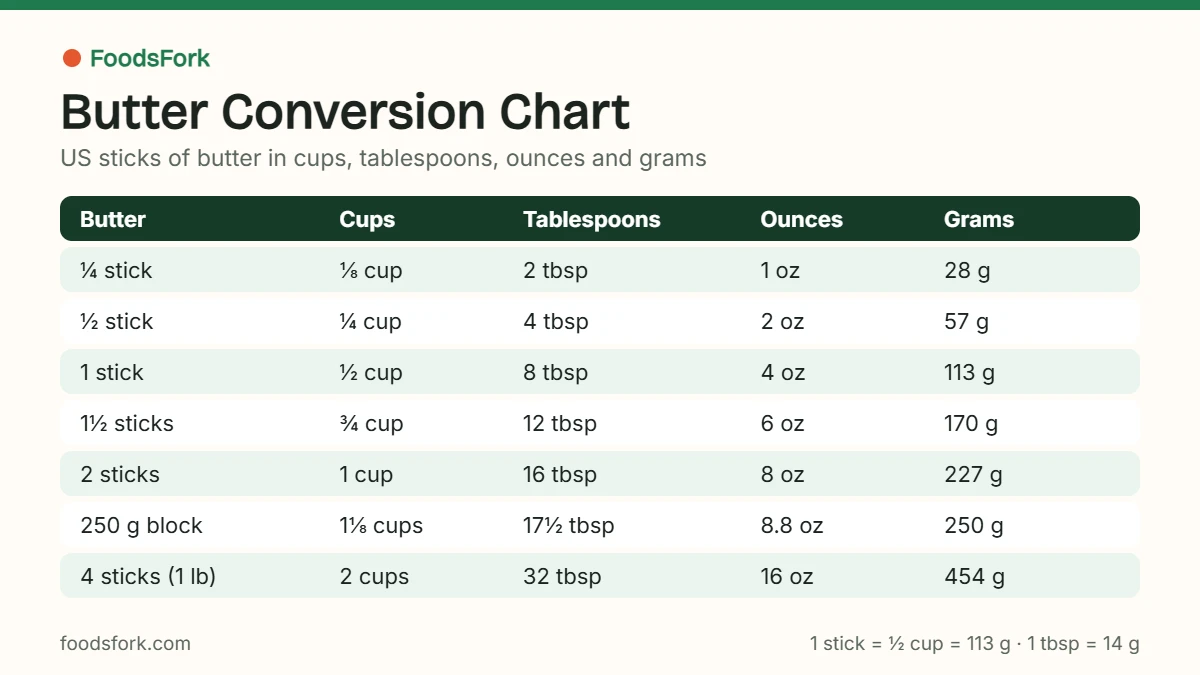
Butter sticks conversion chart
This chart converts US sticks of butter into every other unit. It’s the one to keep on the fridge door.
| Sticks | Cups | Tablespoons | Ounces | Grams |
|---|---|---|---|---|
| ¼ stick | ⅛ cup | 2 tbsp | 1 oz | 28 g |
| ½ stick | ¼ cup | 4 tbsp | 2 oz | 57 g |
| ¾ stick | ⅜ cup | 6 tbsp | 3 oz | 85 g |
| 1 stick | ½ cup | 8 tbsp | 4 oz | 113 g |
| 1½ sticks | ¾ cup | 12 tbsp | 6 oz | 170 g |
| 2 sticks | 1 cup | 16 tbsp | 8 oz | 227 g |
| 3 sticks | 1½ cups | 24 tbsp | 12 oz | 340 g |
| 4 sticks (1 lb) | 2 cups | 32 tbsp | 16 oz | 454 g |
| 6 sticks | 3 cups | 48 tbsp | 24 oz | 680 g |
| 8 sticks (2 lb) | 4 cups | 64 tbsp | 32 oz | 907 g |
The numbers are easy to remember once you know one stick: ½ cup, 8 tablespoons, 4 ounces, 113 grams. Everything else is that stick multiplied or divided.
Cups of butter conversion chart
Many recipes list butter in cups. Here’s each cup measure in sticks, tablespoons, ounces and grams:
| Cups | Sticks | Tablespoons | Ounces | Grams |
|---|---|---|---|---|
| ⅛ cup | ¼ stick | 2 tbsp | 1 oz | 28 g |
| ¼ cup | ½ stick | 4 tbsp | 2 oz | 57 g |
| ⅓ cup | ⅔ stick | 5 tbsp + 1 tsp | 2.67 oz | 76 g |
| ½ cup | 1 stick | 8 tbsp | 4 oz | 113 g |
| ⅔ cup | 1⅓ sticks | 10 tbsp + 2 tsp | 5.33 oz | 151 g |
| ¾ cup | 1½ sticks | 12 tbsp | 6 oz | 170 g |
| 1 cup | 2 sticks | 16 tbsp | 8 oz | 227 g |
| 1½ cups | 3 sticks | 24 tbsp | 12 oz | 340 g |
| 2 cups | 4 sticks | 32 tbsp | 16 oz | 454 g |
King Arthur Baking lists 1 cup of butter at 227 g, which is the figure professional bakers use and matches two US sticks.
Tablespoons of butter to grams
Smaller amounts of butter, for greasing a pan, finishing a sauce or making a roux, are usually given in tablespoons.
| Tablespoons | Grams | Ounces | Sticks |
|---|---|---|---|
| 1 tbsp | 14.2 g | 0.5 oz | ⅛ stick |
| 2 tbsp | 28.3 g | 1 oz | ¼ stick |
| 3 tbsp | 42.5 g | 1.5 oz | ⅜ stick |
| 4 tbsp | 56.7 g | 2 oz | ½ stick |
| 5 tbsp | 70.9 g | 2.5 oz | ⅝ stick |
| 6 tbsp | 85.0 g | 3 oz | ¾ stick |
| 8 tbsp | 113.4 g | 4 oz | 1 stick |
| 10 tbsp | 141.7 g | 5 oz | 1¼ sticks |
| 12 tbsp | 170.1 g | 6 oz | 1½ sticks |
| 16 tbsp | 226.8 g | 8 oz | 2 sticks |
A tablespoon of butter weighs about 14 g. For quick maths, many cooks round it to 15 g, which is close enough for cooking but slightly heavy for baking.
Grams of butter to sticks and cups
Following a metric recipe with American butter? Find the gram amount here to see how many sticks and tablespoons to cut.
| Grams | Sticks | Tablespoons | Cups | Ounces |
|---|---|---|---|---|
| 10 g | 0.09 | 0.7 tbsp | under ⅛ cup | 0.4 oz |
| 15 g | 0.13 | 1.1 tbsp | ⅛ cup | 0.5 oz |
| 25 g | 0.22 | 1.8 tbsp | ⅛ cup | 0.9 oz |
| 30 g | 0.26 | 2.1 tbsp | ⅛ cup | 1.1 oz |
| 50 g | 0.44 | 3.5 tbsp | ¼ cup | 1.8 oz |
| 60 g | 0.53 | 4.2 tbsp | ¼ cup | 2.1 oz |
| 75 g | 0.66 | 5.3 tbsp | ⅓ cup | 2.6 oz |
| 85 g | 0.75 | 6.0 tbsp | ⅜ cup | 3.0 oz |
| 100 g | 0.88 | 7.1 tbsp | ½ cup | 3.5 oz |
| 115 g | 1.01 | 8.1 tbsp | ½ cup | 4.1 oz |
| 125 g | 1.10 | 8.8 tbsp | ½ cup | 4.4 oz |
| 150 g | 1.32 | 10.6 tbsp | ⅔ cup | 5.3 oz |
| 175 g | 1.54 | 12.3 tbsp | ¾ cup | 6.2 oz |
| 200 g | 1.76 | 14.1 tbsp | ⅞ cup | 7.1 oz |
| 225 g | 1.98 | 15.9 tbsp | 1 cup | 7.9 oz |
| 250 g | 2.20 | 17.6 tbsp | 1⅛ cups | 8.8 oz |
| 300 g | 2.65 | 21.2 tbsp | 1⅓ cups | 10.6 oz |
| 340 g | 3.00 | 24.0 tbsp | 1½ cups | 12.0 oz |
| 400 g | 3.53 | 28.2 tbsp | 1¾ cups | 14.1 oz |
| 454 g | 4.00 | 32.0 tbsp | 2 cups | 16.0 oz |
| 500 g | 4.41 | 35.3 tbsp | 2¼ cups | 17.6 oz |
What is a stick of butter?
In the United States, butter is usually sold in 1 lb boxes that hold four individually wrapped quarter-pound sticks. Each stick weighs 4 oz (113 g) and measures ½ cup. The paper wrapper is printed with tablespoon lines, so you can slice off exactly what you need.
Two shapes, same size
US butter sticks come in two shapes. East of the Rocky Mountains, the long, slim “Elgin” stick is most common. In the western states, many dairies use a shorter, wider stick, sometimes called the “western” or “stubby” stick. Both weigh 4 oz and hold 8 tablespoons, so recipes work the same with either. The only difference is which butter dish they fit.
How much butter is in a box?
A standard 1 lb box contains 4 sticks: 2 cups, 32 tablespoons or 454 g. Some brands sell 8 oz packs of 2 sticks, and some sell 1 lb blocks without dividers, which you’ll need to weigh or measure.
Butter around the world
Outside the US, butter is sold by weight, which makes metric recipes very easy to follow:
| Country | Common pack | In US sticks | In cups |
|---|---|---|---|
| United States | 4 × 113 g sticks (1 lb) | 4 sticks | 2 cups |
| UK and Ireland | 250 g block | 2.2 sticks | 1.1 cups |
| Most of Europe | 250 g block (also 125 g) | 2.2 sticks | 1.1 cups |
| Australia and NZ | 250 g block (also 500 g) | 2.2 sticks | 1.1 cups |
| Canada | 454 g (1 lb) block | 4 sticks | 2 cups |
Canadian butter is usually sold as a 1 lb block without stick dividers, so Canadian cooks either weigh it or cut the block into quarters. A quarter of the block equals one US stick.
Fat content
Under USDA standards, butter sold in the US must contain at least 80% milkfat. European and “European-style” butters often contain a little more, typically 82% to 86%, and less water. That makes them richer and slightly better for flaky pastry and laminated dough. You can swap them gram for gram in most recipes.
How to measure butter accurately
- Weigh it. A kitchen scale is the easiest and most accurate method, especially for metric recipes and blocks without markings.
- Use the wrapper lines. For US sticks, slice through the paper at the tablespoon line with a sharp knife.
- Pack soft butter into a cup. If you must use a measuring cup, soften the butter and press it in firmly with a spatula to remove air pockets, then level the top.
- Try water displacement. Fill a 2-cup jug with 1 cup of cold water. Add cold butter pieces until the water rises by the amount you need, then pour off the water.
- Cut blocks by math. A 250 g block can be cut into 10 slices of 25 g with a ruler and a knife.
Melted, whipped, salted and clarified butter
Melted butter
Melting doesn’t change butter’s weight, so a stick is 113 g either way. Its volume barely changes either. The wording of the recipe tells you when to measure. “1 cup butter, melted” means measure solid butter, then melt it. “1 cup melted butter” means melt first, then measure. In practice both give close results, but the first is more accurate.
Whipped butter
Whipped butter has air beaten into it, so a cup of it weighs much less than a cup of regular butter. Don’t swap it cup for cup in baking. If you need to use it, go by weight.
Salted vs unsalted
Most baking recipes call for unsalted butter so the baker controls the salt. Salted butter contains roughly ¼ teaspoon of salt per stick, though brands vary. If you only have salted, use it and cut the recipe’s salt by about ¼ teaspoon for each stick.
Clarified butter and ghee
Clarifying removes the water and milk solids, leaving pure butterfat. Because butter is about 80% fat, you’ll get roughly three-quarters of the starting weight. Start with about 1⅓ sticks (150 g) of butter to end up with 1 stick’s worth of clarified butter or ghee.
Butter substitutions and conversions
Out of butter, or baking for someone who can’t have dairy? These swaps work in most recipes:
| Instead of 1 cup butter | Use | Best for |
|---|---|---|
| Vegetable or canola oil | ¾ cup | Cakes, muffins, quick breads |
| Olive oil | ¾ cup | Savory baking, sautéing |
| Melted coconut oil | 1 cup | Cookies, crumbles, vegan baking |
| Vegetable shortening | 1 cup | Pie crust, biscuits (less flavor) |
| Stick margarine or plant butter | 1 cup | Most recipes, 1:1 |
| Ghee | ¾ cup + 2 tbsp | Cooking, some baking |
Oil makes baked goods moister but less tender and flaky. Butter adds flavor and helps cookies hold their shape, so oil-based cookies spread more. For cookies, pastry and frosting, a plant-based stick butter is the closest match. When converting butter to oil, remember that butter is about 80% fat and the rest is mostly water, which is why you use less oil.
Converting butter in a whole recipe
If you’re scaling a recipe up or down, butter is often the ingredient that gets messy: ⅔ cup of butter for a half batch becomes ⅓ cup, which is 5 tablespoons plus 1 teaspoon, or 76 g. Our recipe scaler handles every ingredient at once, and the tablespoons to cups converter helps with the spoon math.
Butter conversion for a metric recipe: worked example
Say you’ve found a British shortbread recipe that calls for 225 g butter, 100 g caster sugar and 300 g plain flour, and you have American sticks. Here’s the butter conversion step by step:
- Divide by the stick weight. 225 ÷ 113 = 1.99 sticks. That’s 2 sticks, minus a sliver too small to matter.
- Check in cups. 2 sticks = 1 cup. So the recipe needs 1 cup of butter.
- Convert the rest. The sugar and flour need ingredient-specific conversions because cups measure volume. Use our grams to cups converter for those.
Now the other direction. An American recipe calls for ¾ cup butter and you have a 250 g block. ¾ cup is 1½ sticks, or 170 g. Mark your block at 170 g (about two-thirds of the way along) and cut. The leftover 80 g is roughly 5½ tablespoons.
Why weight beats volume for butter
Butter is dense and solid, which makes it awkward to measure in cups. Cold butter leaves air gaps. Soft butter sticks to the cup. Weighing removes both problems. That’s why this butter conversion calculator leads with grams: if you have a scale, weigh the grams. If you don’t, slice by the wrapper lines, which are already weighed for you.
Storing butter
Butter keeps well, but it picks up smells from the fridge easily. Keep it in its wrapper or a covered dish. Unopened butter lasts for weeks in the fridge and several months in the freezer. Freeze it in its original sticks or blocks, so you can still use the wrapper lines after thawing. Thaw it overnight in the fridge for baking.
For recipes that need softened butter, cut the sticks into tablespoon-sized pieces. They soften at room temperature in about 15 to 20 minutes, much faster than a whole stick. Softened butter should give slightly when pressed but still hold its shape. If it looks shiny or greasy, it’s too warm for creaming.
Butter conversion FAQ
How much is a stick of butter?
One US stick of butter is ½ cup, 8 tablespoons, 4 ounces or 113 grams. Four sticks make 1 pound.
How many grams is 1 cup of butter?
One cup of butter weighs 227 grams. That is two US sticks, or 8 ounces.
How many tablespoons are in a stick of butter?
There are 8 tablespoons in one stick of butter. Most wrappers are marked with a line for each tablespoon.
How many sticks of butter are in a cup?
There are 2 sticks of butter in 1 cup. Half a cup is 1 stick.
How many grams is 1 tablespoon of butter?
One tablespoon of butter weighs about 14 grams (14.2 g).
How many sticks is 250 grams of butter?
250 grams of butter is 2.2 US sticks, or 2 sticks plus about 1½ tablespoons. It is a standard block size in the UK, Europe and Australia.
How many grams is half a cup of butter?
Half a cup of butter is 113 grams, exactly one US stick.
How many cups is 100 grams of butter?
100 grams of butter is 0.44 cups, a little under ½ cup. Measure it as 7 tablespoons.
How much butter is 1 pound?
One pound of butter is 4 sticks, 2 cups, 32 tablespoons or 454 grams.
Is melted butter the same as solid butter?
By weight, yes. A stick of butter weighs 113 g melted or solid. By volume it is close too, but measure butter before melting when a recipe says “1 cup butter, melted” and after melting when it says “1 cup melted butter”.
Can I swap oil for butter?
Often, yes. Butter is about 80 percent fat, so use about ¾ the amount of oil: ¾ cup of oil for 1 cup of butter. Cakes and muffins work well, but cookies and pastry usually need solid fat.
Can I use salted butter instead of unsalted?
Yes. Salted butter contains roughly ¼ teaspoon of salt per stick, although brands vary. Reduce the salt in the recipe by about that much.
How do I measure butter without a scale or markings?
Use water displacement. Fill a measuring cup with 1 cup of cold water, add butter until the water reaches the target plus 1 cup, then drain. For ½ cup of butter, the water should rise to 1½ cups.
Related tools
Sources: King Arthur Baking ingredient weight chart (1 cup butter = 227 g); USDA AMS butter grades and standards (80% milkfat minimum); NIST (ounce and pound definitions). See our disclaimer.