Salted vs Unsalted Butter: Which to Use and How to Swap
Salted vs unsalted butter is mostly about salt control. Learn when each one works best, and use the calculator below to fix the salt when you swap one for the other.
Rule of thumb: salted butter has about ¼ teaspoon of salt per stick.
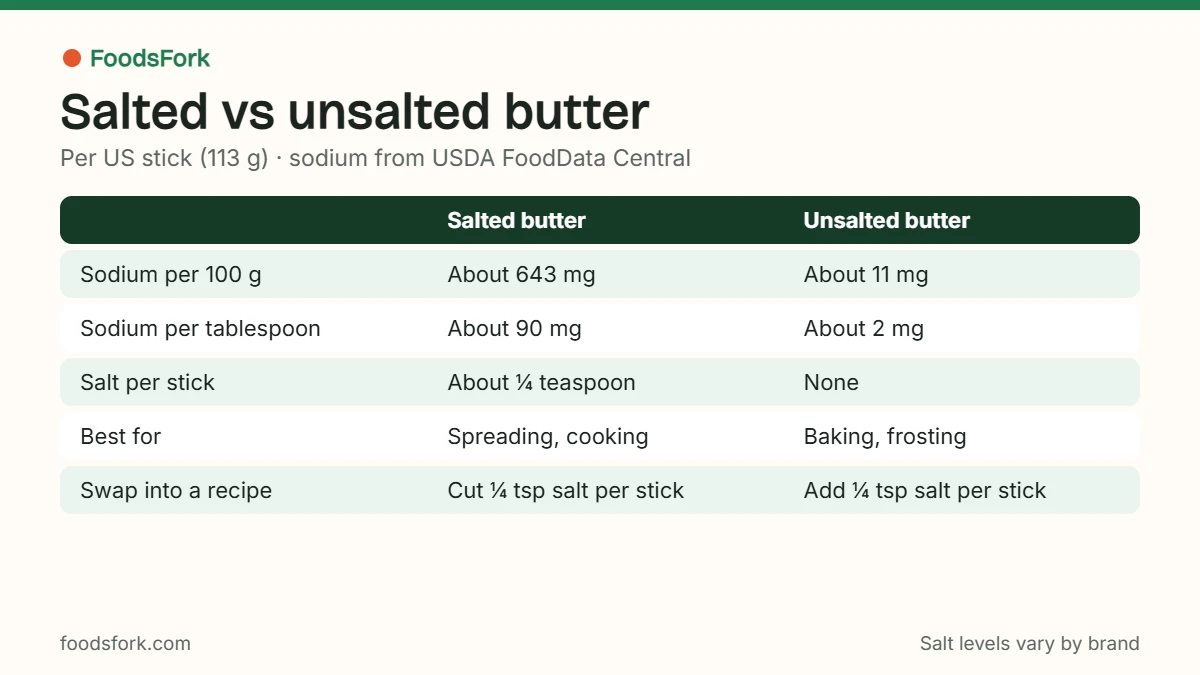
Sodium from USDA FoodData Central: salted butter about 643 mg per 100 g
Quick answer
The only real difference in salted vs unsalted butter is about ¼ teaspoon of salt per stick. Unsalted butter gives you full control, which is why most baking recipes use it. You can use salted butter instead of unsalted: just cut the recipe’s added salt by about ¼ teaspoon for every stick (½ cup). Going the other way, add ¼ teaspoon of salt per stick of unsalted butter.
Key facts
- Salted butter has about ¼ tsp salt per stick (½ cup, 113 g).
- Sodium: about 643 mg per 100 g salted vs 11 mg unsalted (USDA).
- Swap salted for unsalted: cut ¼ tsp salt per stick.
- Swap unsalted for salted: add ¼ tsp salt per stick.
- Use unsalted where butter is the star: frosting, caramel, shortbread.
Salted vs unsalted butter: what is the difference?
Both are made the same way, by churning cream until the fat separates from the buttermilk. Salted butter simply has salt worked in at the end. That one change affects flavor, how long it keeps and how you use it.
| Salted butter | Unsalted butter | |
|---|---|---|
| Salt added | Yes, about ¼ tsp per stick | No |
| Sodium per 100 g | About 643 mg | About 11 mg |
| Sodium per tablespoon | About 90 mg | About 2 mg |
| Taste | Savory, rounder | Sweet, creamy, pure butter |
| Keeps longest | Yes, a little | Best used sooner |
| Best for | Toast, vegetables, cooking | Baking, frosting, sauces |
Sodium figures come from USDA FoodData Central. Brands vary, so your butter may be a little saltier or milder.
How much salt is in salted butter?
USDA lists about 643 mg of sodium in 100 g of salted butter. A US stick weighs 113 g, so it holds about 727 mg of sodium. That works out to roughly 1.8 g of salt, or about ¼ to ⅓ teaspoon of table salt. Most cooks round it to ¼ teaspoon per stick.
Does unsalted butter taste different?
Yes. Without salt, you taste the cream more clearly. It is sweeter and milder. Some people find it bland on bread. In baking, the other ingredients cover the difference, especially once you add the recipe’s salt.
Can I use salted butter instead of unsalted?
Yes, in almost every recipe. The fix is simple: take out some of the salt the recipe adds, so the total stays the same.
| Salted butter used | Cut the added salt by |
|---|---|
| 4 tablespoons (¼ cup, 57 g) | ⅛ teaspoon |
| 1 stick (½ cup, 113 g) | ¼ teaspoon |
| 1½ sticks (¾ cup, 170 g) | ⅜ teaspoon |
| 2 sticks (1 cup, 227 g) | ½ teaspoon |
| 4 sticks (2 cups, 454 g) | 1 teaspoon |
The salt swap calculator at the top of this page does the maths for any amount, including cups, tablespoons and grams. Need to turn a cup of butter into sticks first? Use the butter converter.
Recipes where the swap works well
- Cookies, brownies and most cakes
- Muffins, quick breads and pancakes
- Mashed potatoes, sauces and sautéed vegetables
- Pie crust and biscuits, as long as you cut the added salt
Recipes where unsalted is worth it
- Buttercream frosting. Butter makes up much of the frosting, so salted butter can taste salty.
- Caramel and toffee. Small changes in salt are easy to taste.
- Shortbread and butter cookies. The flavor is mostly butter.
- Brown butter. Salt can make it taste sharp as it reduces.
A half-and-half trick
No unsalted butter for frosting? Mix half salted and half unsalted, or use all salted and leave out every bit of added salt. A pinch of extra sugar or a little vanilla also softens any salty edge.
Can I use unsalted butter instead of salted?
Yes. Add about ¼ teaspoon of salt for every stick (½ cup) of unsalted butter, on top of any salt the recipe already uses. For spreading or finishing a dish, simply add salt to taste.
When a recipe does not say which butter
Many older American recipes just say “butter”. In baking, most writers mean unsalted. In cooking, they often mean salted. If the recipe adds salt separately, unsalted is the safer bet.
Which butter to use for what
| Use | Best butter | Why |
|---|---|---|
| Cakes and cookies | Unsalted | You control the salt exactly |
| Frosting and buttercream | Unsalted | Butter is the main ingredient |
| Pie crust and biscuits | Either | Adjust the added salt |
| Toast and bread | Salted | Salt brings out the flavor |
| Vegetables, corn and potatoes | Salted | Seasons as it melts |
| Pan sauces and beurre blanc | Unsalted | Salt concentrates as sauces reduce |
| Brown butter | Unsalted | Easier to control as it cooks down |
| Garlic bread and compound butter | Either | Salt to taste |
If you only keep one, keep unsalted for baking and add salt when you need it. Many households keep both: unsalted in the fridge for baking and a dish of salted on the table.
Why baking recipes call for unsalted butter
Salt does a lot in baking. It sharpens sweetness, brings out chocolate and vanilla, and strengthens gluten in bread dough. Too much, and a cake tastes flat and salty. Too little, and it tastes dull.
The problem is that salted butter is not standard. One brand may add a little more salt than another. Recipe developers use unsalted butter so their recipe tastes the same in every kitchen. They then add a measured amount of salt.
Does salted butter change texture?
Not in a way most people notice. The amount of salt is small. Salted and unsalted butter cream, melt and bake the same way. The difference is taste.
What about European-style butter?
European-style butter has more fat and less water than standard American butter. US butter must contain at least 80% milkfat under USDA grade standards, while European-style brands often have 82% or more. It can be salted or unsalted. It gives flakier pastry and richer flavor, but the salt rules on this page still apply.
Salt types and swaps
A teaspoon of salt is not the same in every box. Coarse salt has bigger flakes with more air between them, so a teaspoon holds less salt.
| Salt type | How salty per teaspoon | Use instead of 1 tsp table salt |
|---|---|---|
| Table salt or fine sea salt | Full strength | 1 teaspoon |
| Morton kosher salt | About ¾ as salty | About 1⅓ teaspoons |
| Diamond Crystal kosher salt | About ½ as salty | About 2 teaspoons |
| Flaky sea salt | Varies a lot | Best used for finishing |
The calculator above lets you choose your salt, so the amount it gives matches the box in your cupboard.
Storage and shelf life
Salt slows the growth of microbes and the slow change that makes butter taste stale. That is why salted butter keeps its flavor a little longer, especially in a butter dish on the counter.
- Fridge. Both kinds keep well for weeks. Store them wrapped and away from strong smells, because butter absorbs odors.
- Freezer. Both freeze well for months. Wrap tightly and thaw in the fridge.
- Counter. USDA says butter is safe at room temperature, but suggests leaving out only what you will use in a day or two. Salted butter holds up better there.
Need softened butter for a recipe? See our guide on how to soften butter quickly.
Reading butter labels
Sweet cream butter
This just means the butter was made from fresh, not soured, cream. Almost all American butter is sweet cream butter. It can be salted or unsalted, so look for the word “salted” or “unsalted” on the box.
Lightly salted
Some brands make a lightly salted version with less salt than their standard butter. Treat it as about half-salted when you swap.
Cultured butter
Cultured butter is made from cream that has been fermented, like yogurt. It tastes tangy and nutty. It can be salted or unsalted.
Whipped butter
Whipped butter has air beaten in, so a tablespoon weighs less. Do not use it in baking by volume. Weigh it, or use stick butter.
Sodium and health
A tablespoon of salted butter has about 90 mg of sodium. Unsalted butter has almost none. If you are watching sodium, unsalted butter is an easy switch, and you can add flavor with herbs, garlic, lemon zest or pepper instead.
The butter itself is the same in both. Fat and calories do not change with salt.
Common salted butter mistakes
Forgetting to cut the salt
This is the big one. A recipe with two sticks of salted butter and a full teaspoon of added salt ends up with about half a teaspoon more salt than planned. In cookies you may not notice. In frosting or a delicate cake, you will.
Swapping by volume with whipped butter
Whipped butter is lighter, so a cup of it holds less butter and less salt. Recipes are written for stick butter. Use sticks, or weigh the whipped butter.
Salting a sauce before it reduces
Pan sauces and gravies lose water as they simmer, and the salt stays behind. If you finish a sauce with salted butter, add salt only after tasting at the end.
Assuming every brand is the same
Salted butter from one brand can be noticeably saltier than another. If a bake tastes too salty, check the sodium on the label and compare it with the 90 mg per tablespoon used here. Adjust next time.
Quick fix for a salty dish
You cannot take salt out, but you can balance it. Add a little more of the unsalted ingredients, such as cream, potatoes or flour, or a squeeze of lemon in savory dishes. In sweet bakes, a little extra sugar or vanilla helps.
Frequently asked questions
Can I use salted butter instead of unsalted?
Yes, in most recipes. Cut the added salt by about ¼ teaspoon for every stick (½ cup) of salted butter. If the recipe adds less salt than that, leave the salt out.
Can I use unsalted butter instead of salted?
Yes. Add about ¼ teaspoon of salt for every stick (½ cup) of unsalted butter, on top of any salt the recipe already calls for.
What is the difference between salted and unsalted butter?
Salted butter has salt added, about ¼ teaspoon per stick. Unsalted butter has none, so it tastes sweeter and creamier and lets you control the salt in a recipe.
Why do baking recipes use unsalted butter?
Salt levels in salted butter vary by brand. Unsalted butter lets the baker control the exact amount of salt, which matters most in frosting, caramel, shortbread and delicate cakes.
How much salt is in a stick of salted butter?
About ¼ to ⅓ teaspoon of table salt, based on USDA data of about 643 mg sodium per 100 g. The exact amount depends on the brand.
Is salted butter bad for baking?
No. Many bakers use it with good results. Just reduce the added salt. Choose unsalted for recipes where butter is the main flavor.
Does salted butter last longer?
Yes, a little. Salt slows spoilage, so salted butter keeps its flavor longer, especially on the counter. Both keep best wrapped in the fridge or freezer.
Is sweet cream butter salted or unsalted?
It can be either. Sweet cream butter just means butter made from fresh cream. Check the label for the words salted or unsalted.
Which butter is better for spreading on toast?
Salted butter. The salt brings out flavor on bread, vegetables and corn, so most people prefer it at the table.
Can you use salted butter for frosting?
Yes, but the frosting will taste salty-sweet. Leave out any added salt, or use half salted and half unsalted butter for a milder taste.
Related tools and guides
Sources: USDA FoodData Central (butter, salted and without salt); USDA Agricultural Marketing Service butter grade standards; USDA FSIS guidance on butter storage. Checked November 2026.