How to Double a Recipe (or Cut It in Half)
Learn how to double a recipe, halve it or scale it by any amount without guesswork. Use the quick multiplier below for odd measurements like half of ⅓ cup.
1 cup = 16 tbsp = 48 tsp = 236.6 ml · 1 large egg ≈ 3 tbsp beaten (50 g)
Quick answer
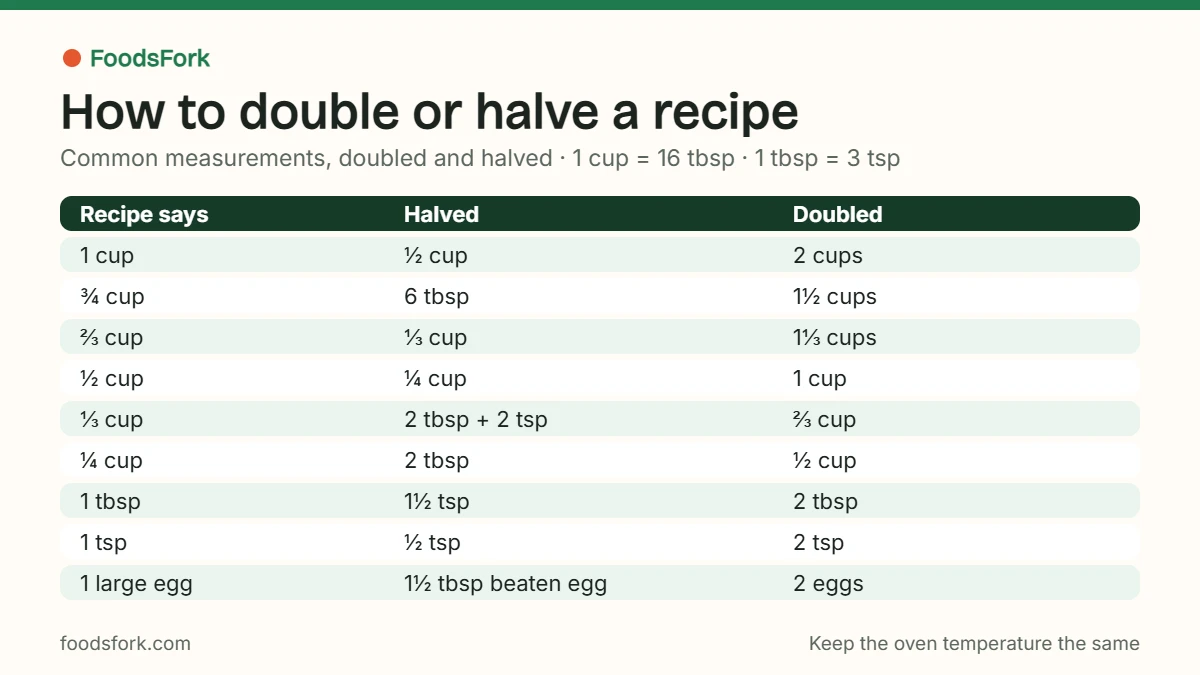
To double a recipe, multiply every ingredient by 2, keep the oven temperature the same, and use a pan with twice the area or two pans of the original size. Start checking at the original time; deeper food may need longer. To halve a recipe, divide everything by 2. Half of ⅓ cup is 2 tbsp + 2 tsp, half of ¾ cup is 6 tbsp, and half an egg is about 1½ tbsp beaten egg.
Key facts
- Double or halve every ingredient, including salt and leavening, for normal batches.
- Keep the oven temperature the same.
- Match the pan: twice the area to double, half the area to halve.
- Check doneness at the original time, then in short steps.
- Half of ⅓ cup = 2 tbsp + 2 tsp; half an egg ≈ 1½ tbsp.
How to double a recipe
Doubling sounds simple, and for most recipes it is. The maths is the easy part. The parts that trip people up are the pan, the timing and the size of the mixing bowl.
Doubling with the recipe scaler
For a long ingredient list, paste it into the recipe scaler. It doubles, halves or resizes everything at once and turns the results into tidy cups and spoons. For a single odd measurement, use the multiplier at the top of this page.
When doubling is not a good idea
Some recipes do not scale well in one batch. Delicate cakes, soufflés, candy, caramel and jam can behave differently in larger amounts. For these, make two separate batches instead of one big one.
How to halve a recipe, or how to cut a recipe in half
Halving takes a little more care, because small amounts are harder to measure and you often end up with fractions of a cup or half an egg.
- Divide each ingredient by 2 and write the new amounts down.
- Switch to spoons for small amounts. Half of ¼ cup is 2 tablespoons; half of 1 tablespoon is 1½ teaspoons.
- Use a smaller pan with about half the area, so the batter stays the same depth.
- Check early. Smaller portions may cook a little faster.
How to cut a recipe into thirds
Thirds are trickier. One third of 1 cup is ⅓ cup. One third of ½ cup is 2 tablespoons plus 2 teaspoons. One third of a tablespoon is 1 teaspoon. The multiplier above has a ⅓ option for these.
Halving and doubling measurements chart
| Recipe says | Halved (½) | Doubled (×2) | Tripled (×3) |
|---|---|---|---|
| 1 cup | ½ cup | 2 cups | 3 cups |
| ¾ cup | 6 tbsp | 1½ cups | 2¼ cups |
| ⅔ cup | ⅓ cup | 1⅓ cups | 2 cups |
| ½ cup | ¼ cup | 1 cup | 1½ cups |
| ⅓ cup | 2 tbsp + 2 tsp | ⅔ cup | 1 cup |
| ¼ cup | 2 tbsp | ½ cup | ¾ cup |
| 2 tbsp | 1 tbsp | ¼ cup | 6 tbsp |
| 1 tbsp | 1½ tsp | 2 tbsp | 3 tbsp |
| 1 tsp | ½ tsp | 2 tsp | 1 tbsp |
| ½ tsp | ¼ tsp | 1 tsp | 1½ tsp |
| ¼ tsp | ⅛ tsp | ½ tsp | ¾ tsp |
Remember the basics: 1 cup is 16 tablespoons, and 1 tablespoon is 3 teaspoons. The tablespoons to cups converter handles anything not in the chart.
Eggs and other odd amounts
How to halve an egg
Crack the egg into a small bowl and beat it with a fork until the white and yolk are fully mixed. A large egg is about 3 tablespoons, or 50 g without the shell. Half an egg is about 1½ tablespoons, or 25 g. Save the rest for scrambled eggs or an egg wash.
Recipes with 3 eggs
Halving 3 eggs gives 1½ eggs: use 1 whole egg plus 1½ tablespoons of beaten egg. Doubling 3 eggs is simply 6.
Butter sticks
US butter wrappers are marked in tablespoons, which makes halving easy. Half a stick is 4 tablespoons, or ¼ cup. The butter converter turns sticks, cups and grams into each other.
Cans and packages
If a recipe uses one can, use the whole can when you double, and two cans when you double. When halving, measure half of the can and keep the rest. The can’s weight is on the label in ounces and grams.
What size pan to use when you double or halve
The goal is to keep the batter or food at the same depth as the original. That means changing the pan’s area by the same amount as the recipe.
| Original pan | Area | To double, use | To halve, use |
|---|---|---|---|
| 8-inch square | 64 sq in | 9 by 13 inch (117 sq in) or two 8-inch squares | Loaf pan or 6-inch square |
| 9-inch square | 81 sq in | Two 9-inch squares or a 10 by 15 inch pan | Loaf pan, 9 by 5 inch |
| 9-inch round | 64 sq in | Two 9-inch rounds or a 9 by 13 inch pan | 6-inch round (about 28 sq in, a bit small) |
| 9 by 13 inch | 117 sq in | Two 9 by 13 inch pans or a half sheet pan | 8-inch square (64 sq in) |
| Loaf, 9 by 5 inch | 45 sq in | Two loaf pans or a 9-inch square | 6-inch round |
| 12-cup muffin tin | 12 muffins | Two muffin tins | 6 muffins in the same tin |
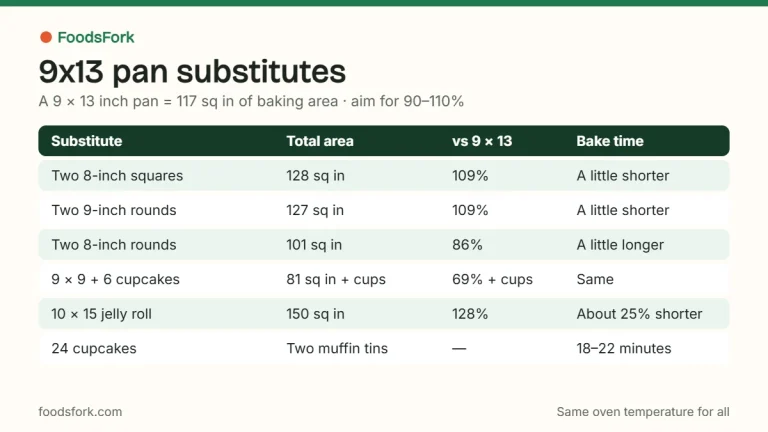
Not sure if a pan you own will work? The cake pan size calculator compares any two pans and tells you how much to scale the recipe. For 9 by 13 recipes, see our guide to 9×13 pan substitutes.
Fill empty muffin cups
When halving a muffin or cupcake recipe in a 12-cup tin, half-fill the empty cups with water. They heat more evenly and the tin is less likely to warp.
Baking time and temperature
Keep the temperature the same
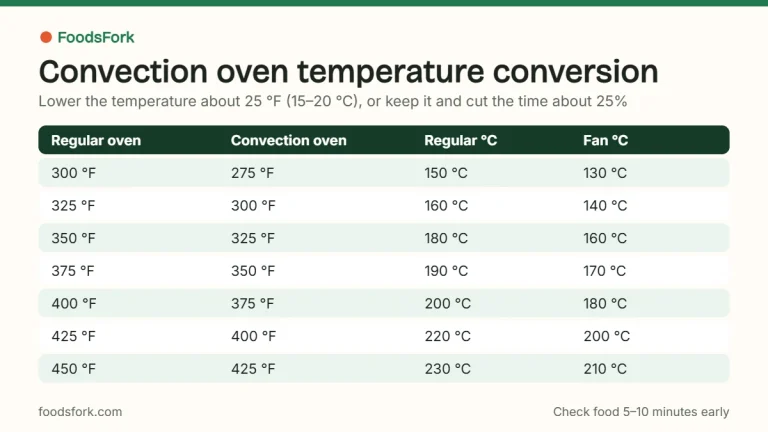
The oven temperature does not change when you double or halve a recipe. Temperature controls browning and how fast heat reaches the center. Changing it usually does more harm than good.
When the time changes
- Same depth, more pans: about the same time. Two pans in the oven at once may need a few minutes more, especially on different racks.
- Deeper food: longer. A deeper cake, casserole or lasagna can need 10% to 25% more time.
- Smaller portions: often a little less time. Check 5 to 10 minutes early.
- Roasts: time depends on thickness, not total weight. Two chickens take about the same time as one, if the oven is not crowded.
Use doneness cues, not just the clock
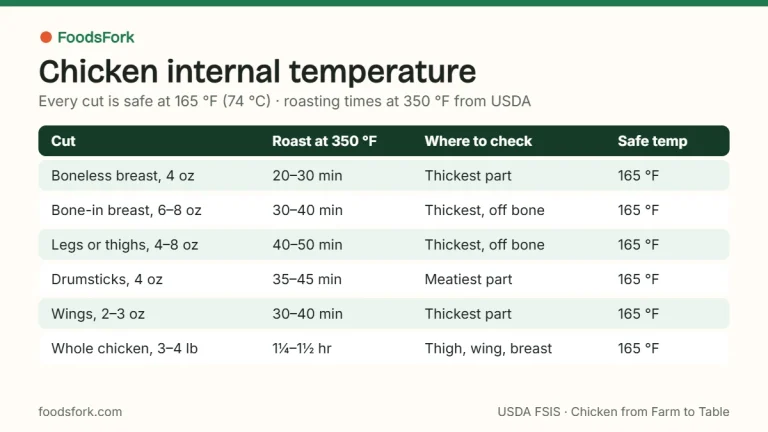
A toothpick that comes out clean, a center that springs back, edges pulling from the pan, golden color, or a safe internal temperature for meat. For meat and poultry, a thermometer is the only sure test; see our chicken internal temperature guide.
Two pans at once
Place pans on the same rack if they fit, with space between them and the oven walls. If you must use two racks, swap and turn the pans halfway through.
Salt, spices and leavening
For normal doubling or halving, scale everything, including salt, spices, baking soda, baking powder and yeast. Most home recipes are balanced, and changing one ingredient on its own throws that balance off.
Big batches
When you triple or quadruple a recipe, some cooks start with a little less salt, chili, garlic and strong spices, then taste and add more. Flavors can seem stronger in large pots of soup or sauce.
Leavening in baking
Double baking soda and baking powder along with the flour. Problems with big batches usually come from the batter sitting too long before baking, not from the amount of leavening. Bake promptly, or mix two separate batches.
How to double different kinds of recipes
Cookies
Cookies double well. Keep each cookie the same size and bake extra trays rather than making bigger cookies. Let the trays cool between batches.
Cakes
Double in two pans the original size, or one pan with twice the area. A doubled batter in a single deep pan will dome, crack and stay raw in the middle.
Bread
Bread doubles well, including the yeast. The dough may rise a little faster in a big mass. Check your mixer’s capacity, and shape two loaves.
Soups, stews and sauces
These double easily. A bigger pot takes longer to come to a boil, and liquids reduce more slowly, so allow extra simmering time if you want it thicker.
Casseroles and lasagna
Use two dishes, or a dish with twice the area. If you use a deeper dish, cover it with foil for the first part of baking and expect it to take longer.
Why scaling by weight is easier
Grams make scaling simple. Half of 240 g is 120 g, and double is 480 g. There are no fractions, no spoons and no guessing what half of ⅓ cup is.
To switch a recipe to weights, use the cups to grams converter once, write the grams on the recipe, and scale from there next time.
Common mistakes when scaling a recipe
| Mistake | What happens | Fix |
|---|---|---|
| Doubling as you go | Ingredients get missed or doubled twice | Write the new amounts first |
| Same pan, double batter | Thick, raw middle | Use twice the area or two pans |
| Raising the oven temperature | Burnt outside, raw inside | Keep the same temperature |
| Doubling the time | Overcooked food | Check at the original time |
| Eyeballing small amounts | Too much salt or soda | Use measuring spoons |
| Overfilling the mixer | Spills and uneven mixing | Mix in two batches |
Frequently asked questions
How do you double a recipe?
Multiply every ingredient by 2. Keep the oven temperature the same, use a pan with twice the area or two pans of the original size, and start checking for doneness at the original time. Cooking time may increase if the food is deeper.
How do you halve a recipe?
Divide every ingredient by 2, using measuring spoons for small amounts. For an odd number of eggs, beat one egg and use half, about 1½ tablespoons. Use a pan with half the area and check for doneness early.
How do you cut a recipe in half when it calls for ⅓ cup?
Half of ⅓ cup is 2 tablespoons plus 2 teaspoons. Half of ¾ cup is 6 tablespoons, and half of ¼ cup is 2 tablespoons.
Do you double the baking time when you double a recipe?
No. If you use two pans or a pan with twice the area, the time stays about the same. If the batter or food is deeper, it may need 10 to 25% longer. Check early and use doneness cues.
Should you double salt, spices and baking soda?
For most home recipes, yes, double them. If you scale a recipe up three times or more, start with a little less salt and strong spices, then taste and adjust.
How do you halve an egg?
Crack the egg into a cup, beat it with a fork until smooth, then measure out half. A large egg is about 3 tablespoons, so half is about 1½ tablespoons, or 25 g.
Can you double a cake recipe in one pan?
Only if the pan has about twice the area, like going from an 8-inch square to a 9 by 13. A doubled batter in the same pan will be too deep and will not bake evenly.
Can you double a bread recipe?
Yes. Double all the ingredients, including the yeast. Make sure your mixer can handle the larger dough, or mix it in two batches. Shape it into two loaves rather than one big one.
Does doubling a recipe change the oven temperature?
No. Keep the same oven temperature. Only change it if you switch to a very different pan, such as a glass dish, which bakes a little faster.
What is the easiest way to scale a recipe?
Weigh ingredients in grams, because grams double and halve cleanly. Or paste the recipe into a recipe scaler, which converts the amounts into tidy cups and spoons.
Related tools and guides
How we checked this guide: conversions use 1 US cup = 16 tablespoons = 48 teaspoons = 236.6 ml, and pan areas are calculated from pan dimensions. Checked November 2026.