9×13 Pan Substitute: What to Use Instead
No 9×13 pan? Here is the best 9×13 pan substitute for cakes, brownies and casseroles. Pick the pans you have below to see if they will work and how to adjust the time.
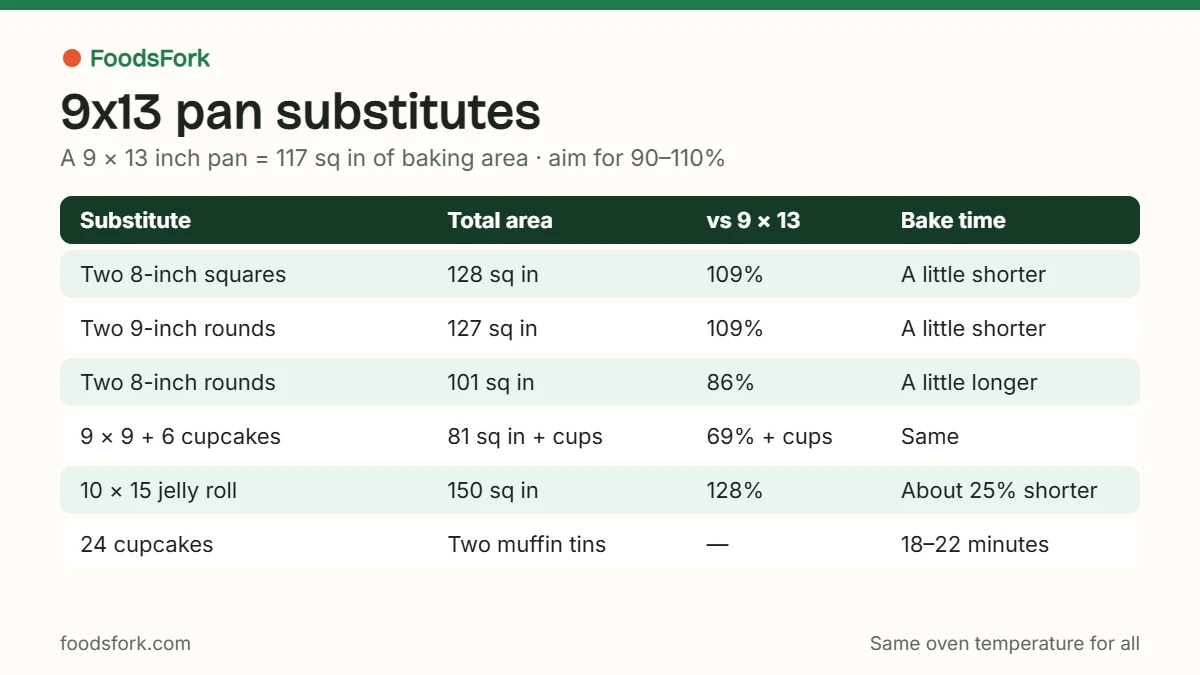
A 9 × 13 inch pan has 117 square inches of baking area and holds about 14 cups.
Areas from pan dimensions. Times are a starting point only.
Quick answer
The best 9×13 pan substitute is two 8-inch square pans or two 9-inch round pans. A 9 by 13 inch pan has 117 square inches, and each pair adds up to about 127 to 128, close enough to swap at the same temperature. Start checking 5 minutes early, since the layer is a little thinner. A 3-quart baking dish also works, and a 9×13 cake recipe makes about 24 cupcakes.
Key facts
- A 9 × 13 inch pan has 117 sq in and holds about 14 cups.
- Best swaps: two 8-inch squares or two 9-inch rounds.
- Aim for pans that add up to 90–110% of the area.
- Keep the same oven temperature; adjust the time.
- A 9×13 cake recipe makes about 24 cupcakes.
How big is a 9×13 pan?
A standard 9 by 13 inch pan measures 9 inches by 13 inches across the top and is about 2 inches deep. That gives it 117 square inches of baking area. Filled to the brim, it holds about 14 cups. Most recipes fill it about halfway, with 7 to 8 cups of batter.
Many glass and ceramic 9 by 13 dishes are sold as 3-quart baking dishes. If your recipe says “3-quart dish”, a 9×13 is what it means, and the other way around.
Why area matters more than shape
When you swap pans, the goal is to keep the batter or food at about the same depth. Depth controls how long heat takes to reach the center. If the new pans have about the same total area, the depth stays the same, and so does the bake time. Shape matters much less.
The best 9×13 pan substitutes
1. Two 8-inch square pans
Two 8 by 8 inch pans give 128 square inches, about 109% of a 9 by 13. This is the easiest swap for brownies, bars, cakes and casseroles. The layer is slightly thinner, so start checking about 5 minutes early.
2. Two 9-inch round pans
Two 9-inch rounds give about 127 square inches. This is a natural choice for cake. Many 9 by 13 sheet cake recipes turn into a two-layer round cake with no other changes.
3. Two 8-inch round pans
Two 8-inch rounds give about 101 square inches, about 86% of a 9 by 13. The batter will be a little deeper. Fill each pan no more than two-thirds full and expect a few minutes more in the oven.
4. A 3-quart baking dish
Any 3-quart casserole dish of a similar depth is a direct swap, especially for casseroles, lasagna and baked pasta.
5. A jelly roll pan
A 10 by 15 inch jelly roll pan has 150 square inches, about 28% more. The layer will be much thinner. It works well for bars and sheet cakes. Bake for about a quarter less time.
6. Cupcakes
A 9 by 13 cake recipe makes about 24 standard cupcakes. Fill each cup about two-thirds full and bake for about 18 to 22 minutes at the same temperature.
9×13 pan substitute chart
| Pan or pans | Total area | Compared with 9 × 13 | Verdict |
|---|---|---|---|
| Two 8-inch squares | 128 sq in | 109% | Great match |
| Two 9-inch rounds | 127 sq in | 109% | Great match |
| Two 8-inch rounds | 101 sq in | 86% | Good; slightly deeper |
| One 10-inch round | 79 sq in | 67% | Too small alone |
| One 9-inch square | 81 sq in | 69% | Use for ⅔ of the batter |
| One 11 × 7 inch pan | 77 sq in | 66% | Use for ⅔ of the batter |
| Two 9 × 5 loaf pans | 90 sq in | 77% | Deeper; longer bake |
| 10 × 15 jelly roll pan | 150 sq in | 128% | Thinner; shorter bake |
| 13 × 18 half sheet | 234 sq in | 200% | For a doubled recipe |
| 10-inch Bundt pan | About 12 cups | Similar volume | Cakes only; longer bake |
| Two 12-cup muffin tins | 24 cupcakes | — | Cakes only |
Want to compare pans not listed here? The cake pan size calculator compares any two pans and tells you how much to scale the recipe.
9×13 substitutes for cakes
For cake, two 9-inch rounds or two 8-inch squares are the best choice. Divide the batter evenly between the pans; weighing each pan is the easiest way to get them even.
- Grease and line the pans so the cakes release cleanly.
- Fill each pan no more than two-thirds full.
- Bake on the same rack if both fit, with space between them.
- Start checking about 5 minutes early. The cake is done when a toothpick in the center comes out clean.
Turning a sheet cake into a layer cake
Two 9-inch rounds turn a 9 by 13 sheet cake into a classic two-layer cake. You may need extra frosting, about half as much again, to cover the sides as well as the top.
Bundt and tube pans
Thick batters, like pound cake and many chocolate cakes, bake well in a 10-inch Bundt. Light, foamy batters may be too delicate. The cake will be much deeper, so it needs a lot longer. Start checking at about 1½ times the original time.
9×13 substitutes for brownies and bars
Two 8-inch square pans are perfect for brownies and bars. The layer will be about 10% thinner, so brownies may be a little less fudgy and done a few minutes sooner.
A 9-inch square holds about two-thirds of the batter. If you only have one, pour in two-thirds of the batter and bake the rest in a loaf pan or a few muffin cups. Putting all of it in a 9×9 makes thick bars that stay underbaked in the middle.
Very thin bars
In a jelly roll pan, brownies and blondies come out thin and chewy, more like a cookie bar. Bake for about 25% less time and watch the edges closely.
9×13 substitutes for casseroles and lasagna
For casseroles, any 3-quart dish works. Two 8-inch square dishes also work well, and they are handy: bake one now and freeze the other.
- Lasagna: two 8-inch squares make two smaller lasagnas. Each may need 5 to 10 minutes less.
- Baked pasta and gratins: deeper dishes need longer. Cover with foil for the first half so the top does not burn.
- Overnight breakfast casseroles: these rely on even depth. Keep it similar to the original.
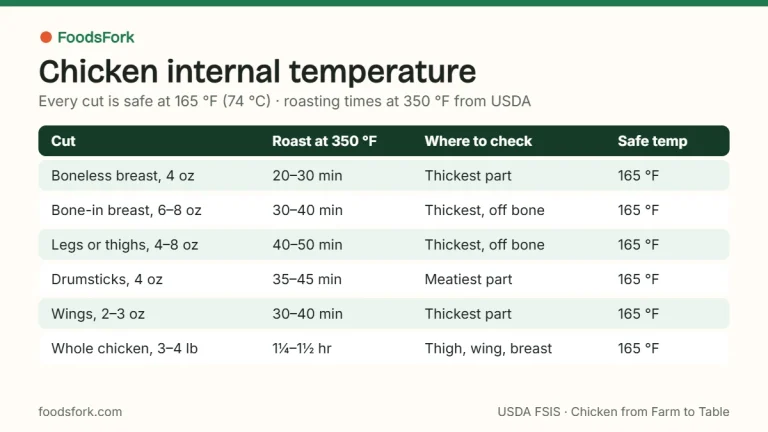
Whatever you bake, check that the center is hot. Dishes with eggs, meat or poultry should reach a safe temperature; see our chicken internal temperature guide for the numbers.
How to adjust the bake time
Keep the oven temperature the same. Change the time to match how deep the food is.
| If your pans are… | The layer will be… | Bake time |
|---|---|---|
| About the same area (90–110%) | About the same | Same; check 5 minutes early |
| Bigger (110–130%) | Thinner | About 20–25% shorter |
| Smaller (75–90%) | Deeper | About 5–15% longer |
| Much smaller (under 75%) | Too deep | Use another pan for the extra |
The finder at the top of this page gives a suggested time to start checking. Use doneness cues to decide: a clean toothpick for cakes, set edges and a slightly soft center for brownies, and a bubbling, hot center for casseroles.
Glass, metal or ceramic?
Metal pans
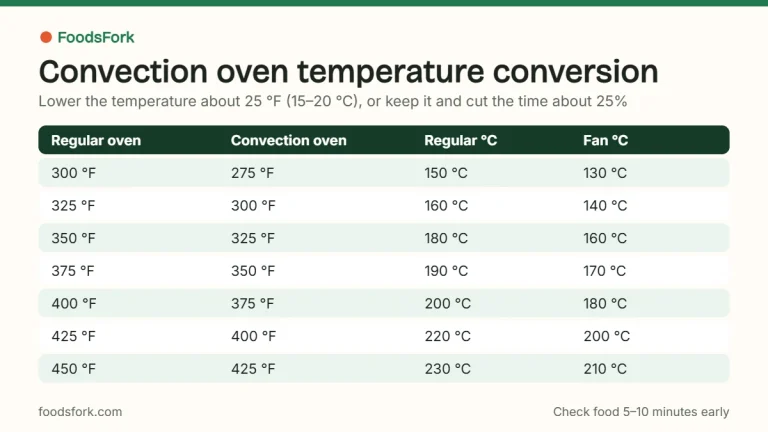
Light-colored aluminum pans heat quickly and evenly. Most cake and brownie recipes are tested in them. Dark metal pans brown faster; some bakers lower the temperature by about 25 °F.
Glass dishes
Glass heats slowly but holds heat well, so the edges and bottom can brown more. Many bakers lower the temperature by 25 °F for cakes baked in glass. Glass is great for casseroles.
Ceramic and stoneware
Ceramic behaves like glass. It is ideal for casseroles, gratins and baked pasta. Never move a glass or ceramic dish straight from the fridge to a hot oven, as it can crack.
Doubling or halving a 9×13 recipe
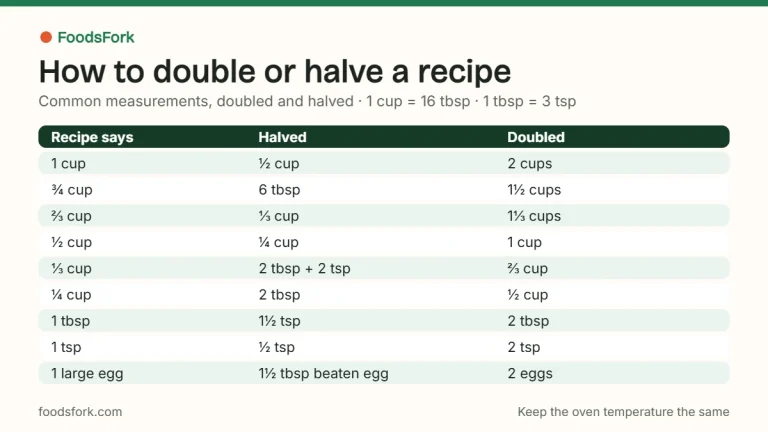
To halve a 9 by 13 recipe, use an 8-inch square pan. Half of 117 square inches is about 59, and an 8-inch square has 64, close enough. To double it, use two 9 by 13 pans or one half sheet pan of 13 by 18 inches.
Our guide on how to double a recipe explains how to scale the ingredients, and the recipe scaler does the maths for you.
Common pan swap mistakes
Pouring all the batter into one smaller pan
This is the most common mistake. A full 9 by 13 recipe in a single 9-inch square is about 45% deeper. The outside overbakes while the middle stays wet, and cakes can overflow. Split the batter or use a second pan.
Raising the oven temperature to save time
Turning the oven up burns the edges before the center cooks. Keep the recipe temperature and adjust only the time.
Uneven batter between pans
If one pan has more batter, it finishes later. Weigh the pans as you fill them, or count scoops, so both bake in the same time.
Forgetting the oven itself
If bakes are always too dark or too pale, the oven may be running off. Our guide on how to check oven temperature shows a simple test.
Frequently asked questions
What can I use instead of a 9×13 pan?
Two 8-inch square pans or two 9-inch round pans are the closest swaps. Each pair has about 127 to 128 square inches, very close to a 9 by 13 pan's 117. Bake at the same temperature and check a few minutes early.
How many square inches is a 9×13 pan?
A 9 by 13 inch pan has 117 square inches of baking area. It holds about 14 cups when filled to the brim.
Can I use two 8×8 pans instead of a 9×13?
Yes. Two 8-inch square pans have 128 square inches, about 9% more than a 9 by 13. The layer will be slightly thinner, so start checking 5 minutes early.
Can I use a 9×9 pan instead of a 9×13?
Not for a full recipe. A 9-inch square is only about 69% of the size. Use it for about two-thirds of the batter and bake the rest as cupcakes, or halve the recipe and fill a 9×9 a little thinner.
Is a 9×13 pan the same as a 3-quart baking dish?
Usually, yes. Most 9 by 13 inch glass and ceramic baking dishes are sold as 3-quart dishes. A 3-quart oval or round dish works too, if it is a similar depth.
Can I use a jelly roll pan instead of a 9×13?
Yes, for bars and sheet cakes. A 10 by 15 inch jelly roll pan is about 28% bigger, so the layer is thinner. Bake about 25% less time and check early.
How many cupcakes does a 9×13 cake recipe make?
About 24 standard cupcakes. Fill each cup about two-thirds full and bake for about 18 to 22 minutes at the same temperature.
Can I bake a 9×13 recipe in a Bundt pan?
For cake batter, yes. A 10-inch Bundt holds about 12 cups. The batter will be much deeper, so it can need 40% to 60% longer. Test with a skewer.
Can I use an 11×7 pan instead of a 9×13?
Not for the whole recipe. An 11 by 7 inch pan has 77 square inches, about two-thirds of a 9 by 13. It is a good size for two-thirds of the recipe.
Does a glass 9×13 dish bake differently?
Yes. Glass heats more slowly but holds heat longer, so edges can brown more. Many bakers lower the temperature by 25 °F for glass, especially for cakes.
Related tools and guides
How we checked this guide: pan areas are calculated from pan dimensions (round pans use πr²). Volumes are typical values for standard pans. Checked November 2026.