How to Measure Flour the Right Way
Most baking problems start with the flour. Here is how to measure flour so your cup matches the recipe. Enter your cups below to see what they should weigh, and how much your method may be adding.
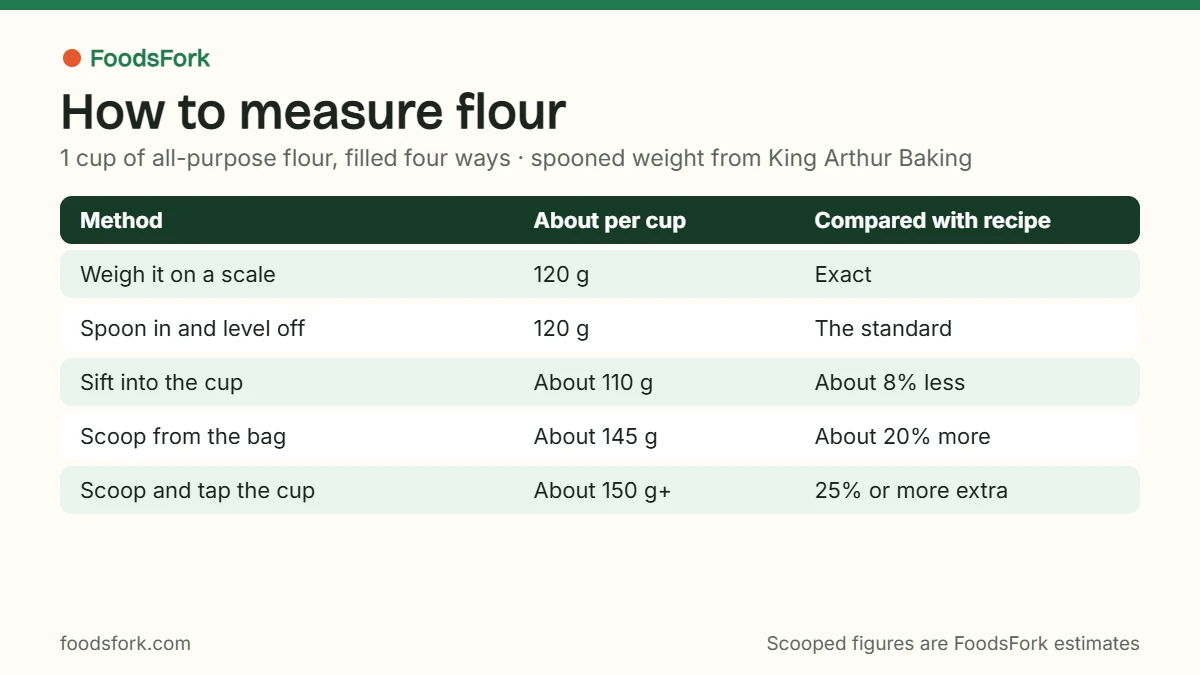
Weights are for US cups, spooned and leveled, from King Arthur Baking. Other methods are FoodsFork estimates.
Spooned weights from King Arthur Baking’s ingredient weight chart
Quick answer
To measure flour correctly, fluff it, spoon it into a dry measuring cup and level the top with a knife. Do not scoop with the cup, pack it or tap it. Better still, weigh it: 1 cup of all-purpose flour is 120 g (4.25 oz). Scooping straight from the bag can pack in about 20% more flour, which is why cookies turn out dry and cakes dense.
Key facts
- Best: weigh it. 1 cup all-purpose flour = 120 g.
- Next best: spoon and level into a dry measuring cup.
- Scooping can add about 20% extra flour.
- “1 cup sifted flour” means sift, then measure.
- Whole wheat flour is about 113 g per cup; almond flour about 96 g.
Why it matters how you measure flour
Flour is light and squishy. Its weight in a cup changes a lot with how you fill the cup. Fluffy flour has air between the grains. Packed flour does not. The same measuring cup can hold anywhere from about 110 g to 150 g of all-purpose flour.
That gap is bigger than it sounds. A cookie recipe with 2¼ cups of flour expects about 270 g. Scoop it, and you might add 60 g or more. That is half a cup of extra flour, enough to turn chewy cookies into dry pucks.
What extra flour does to a bake
- Cookies spread less and come out thick, dry and cakey.
- Cakes bake up dense, dry and domed, and may crack on top.
- Bread dough feels stiff and rises less.
- Pancakes and muffins turn heavy and tough.
What too little flour does
Too little flour is less common, but it happens with sifted or very fluffy flour. Cookies spread thin, cakes sink in the middle and doughs stay sticky.
How to measure flour with the spoon and level method
This is the method most American recipes are written for. It gives a light, consistent cup without any special tools.
With this method, a cup of all-purpose flour weighs about 120 g, the figure used in King Arthur Baking’s ingredient weight chart. It is also what FoodsFork uses in all its converters.
Spoon and level flour for small amounts
The same method works for tablespoons and teaspoons. Dip the spoon in loosely, then level it with a knife. One cup equals 16 tablespoons, so a tablespoon of flour weighs about 7.5 g. The tablespoons to cups converter helps with odd amounts.
Which measuring cups to use
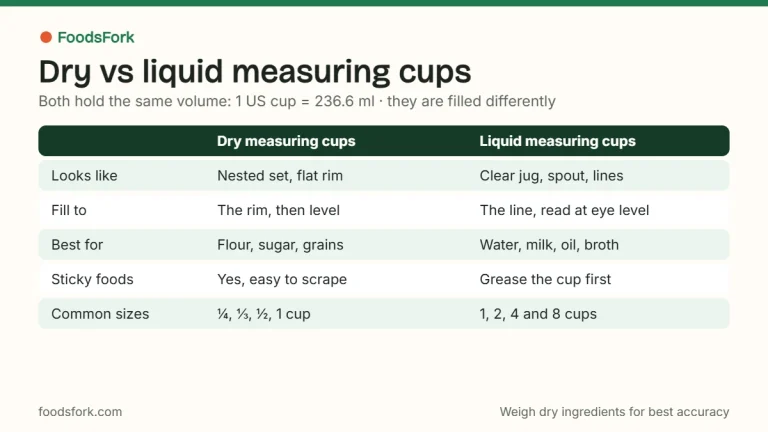
Use dry measuring cups, the kind that come in nested sizes with a flat rim. Liquid measuring cups have a spout and extra space above the top line, so you cannot level them. Read more in our guide to dry vs liquid measuring cups.
The most accurate way: weigh your flour
A kitchen scale takes all the guessing out. There is no fluffing, no leveling and fewer dishes. Professional bakers weigh almost everything for this reason.
- Put your mixing bowl on the scale.
- Press the tare or zero button.
- Spoon flour into the bowl until the scale shows the weight you need.
- Press tare again before adding the next ingredient.
Not sure what your recipe’s cups weigh? Type them into the checker at the top of this page, or use the cups to grams converter for other ingredients. Going the other way, the grams to cups converter turns a metric recipe into cups.
Is a cup of flour 120 g or 125 g?
Both numbers are used. King Arthur Baking uses 120 g for spooned and leveled all-purpose flour. USDA nutrition data and many other charts use about 125 g. The 5 g gap is small, about 4%, and most recipes handle it fine. If a recipe gives grams, use those.
Why you should not scoop flour
Scooping, also called dip and sweep, means plunging the measuring cup into the bag and leveling it off. It is fast, and many people grew up doing it. The trouble is that pushing the cup into the flour packs it down.
In FoodsFork’s estimates, a scooped cup of all-purpose flour weighs about 140 g to 150 g. Tap the cup on the counter to settle it and it can go even higher. That is 20% to 25% more flour than the recipe expects.
Are there recipes written for scooping?
A few are. Some older cookbooks and some bakers write their recipes using the dip and sweep method. If a recipe says so, follow it. If it does not say, spoon and level.
Sifted flour: before or after measuring?
Read the wording carefully. The position of the word “sifted” changes the amount.
| Recipe says | What to do | Result |
|---|---|---|
| 1 cup sifted flour | Sift the flour first, then spoon it into the cup and level | Less flour, about 8% lighter |
| 1 cup flour, sifted | Measure the cup first, then sift it into the bowl | The normal amount, just aerated |
| 1 cup flour | Spoon and level; no sifting needed | The standard amount |
Do you need to sift flour at all?
Modern flour is already fine and free of lumps, so most recipes do not need sifting. Sifting still helps with cake flour, powdered sugar and cocoa powder, which clump. A whisk does a similar job: whisk the dry ingredients together for 30 seconds.
How to measure different types of flour
The spoon and level method works for all flours, but they do not weigh the same per cup.
| Flour | Weight per cup (spooned) | Notes |
|---|---|---|
| All-purpose flour | 120 g | The standard for most recipes |
| Bread flour | 120 g | Same volume weight as all-purpose |
| Cake flour | 120 g | Often sifted; clumps more |
| Whole wheat flour | 113 g | Coarser and slightly lighter |
| Self-rising flour | 113 g | Contains baking powder and salt |
| Almond flour | 96 g | Spoon gently; do not pack |
| Coconut flour | 128 g | Very absorbent; never swap 1:1 |
| Rye flour | 106 g | Lighter and stickier |
Weights come from King Arthur Baking. All 50+ ingredients are in the cups to grams converter.
Gluten-free flour blends
Blends vary a lot from brand to brand. Many weigh 120 g to 140 g per cup. Check the package, and weigh if you can, since gluten-free baking is sensitive to small changes.
How to measure flour without a measuring cup or scale
No measuring cup
Use a scale if you have one. If you only have tablespoons, 1 cup is 16 level tablespoons. A ½ cup is 8 tablespoons and a ¼ cup is 4.
No scale
Spoon and level is the best method without a scale. Be consistent, and do not pack or tap.
No cup and no scale
A standard coffee mug holds roughly 1 to 1½ cups, which is too varied for baking. A better option is a drinking glass you have measured once with water: 1 US cup is 237 ml. Mark the line, and spoon flour to it. It will not be perfect, but it is better than guessing.
Tips for measuring flour accurately
- Store flour in a wide container. It is easier to fluff and spoon than flour in a narrow paper bag.
- Measure over the container. Extra flour falls back in, not onto the counter.
- Use the right size cup. Measure ⅓ cup in a ⅓-cup measure, not by eye in a 1-cup measure.
- Measure flour before wet ingredients. A damp cup makes flour stick.
- Weigh for big batches. Small errors add up when you measure many cups.
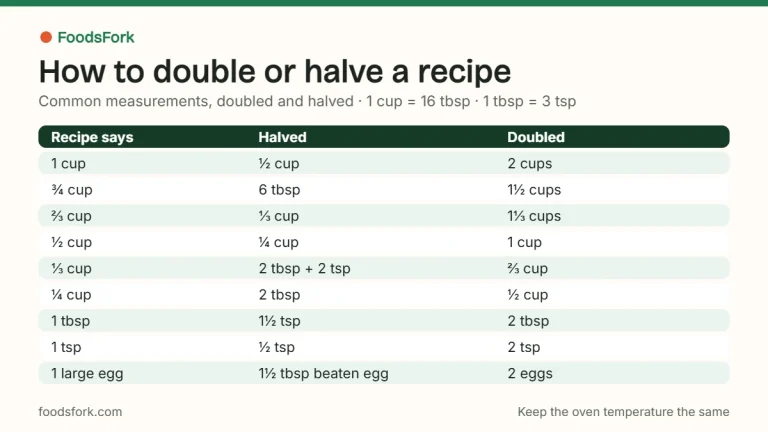
- Scaling a recipe? Convert to grams first, then scale. The recipe scaler handles the maths.
What if you added too much or too little flour?
Too much flour
For cookie dough, add a tablespoon or two of milk or a little more softened butter until it feels right. For cake batter, add a splash of milk. For bread dough, knead in a little water a teaspoon at a time.
Too little flour
For sticky cookie dough, chill it for 30 minutes before deciding. Cold dough is firmer. If it is still too soft, add flour a tablespoon at a time. For bread, add flour little by little while kneading until the dough stops sticking.
How to tell next time
Weigh one cup the way you normally fill it. If it is well over 120 g, switch to spooning. It is a two-minute test that can fix a lot of baking problems.
Frequently asked questions
What is the correct way to measure flour?
Fluff the flour in its bag or container, spoon it into a dry measuring cup until it overflows, then level the top with the flat edge of a knife. Do not pack it or tap the cup. Better still, weigh it: 1 cup of all-purpose flour is 120 g.
How much does 1 cup of flour weigh?
About 120 g (4.25 oz) for all-purpose flour that is spooned and leveled, using King Arthur Baking's figure. Some charts use 125 g. A scooped cup can weigh 140 g or more.
Should you scoop or spoon flour?
Spoon it. Scooping with the measuring cup presses the flour down and can add about 20% more than the recipe expects, which makes bakes dry and dense.
What does spoon and level flour mean?
It means spooning flour into the measuring cup until it is heaped, then sweeping a straight edge across the top to remove the extra. It gives a light, even cup close to what most recipes expect.
Do you sift flour before or after measuring?
Follow the wording. '1 cup sifted flour' means sift first, then measure. '1 cup flour, sifted' means measure first, then sift. If the recipe does not say, measure without sifting.
How do you measure flour without a measuring cup?
Use a kitchen scale and weigh it, at 120 g per cup of all-purpose flour. Without a scale, 1 cup equals 16 tablespoons, so you can spoon and level 16 level tablespoons.
How do you measure flour without a scale?
Use the spoon and level method with dry measuring cups. Fluff the flour, spoon it into the cup, and level it off with a knife without packing.
Is a cup of bread flour the same weight as all-purpose?
Close. Both are about 120 g per cup when spooned and leveled. Whole wheat flour is a little lighter at about 113 g per cup.
Can you use a liquid measuring cup for flour?
It is not ideal. You cannot level the top of a liquid cup, so the amount is less accurate. Use dry measuring cups or a scale for flour.
Why are my cookies dry and cakey?
Too much flour is the most common cause. Scooping straight from the bag can add a quarter more flour than the recipe needs. Spoon and level, or weigh your flour.
Related tools and guides
Sources: King Arthur Baking ingredient weight chart; USDA FoodData Central. Scooped and sifted weights are FoodsFork estimates. Checked November 2026.