Convection Oven Temperature Conversion Made Easy
Use this convection oven temperature conversion to cook any regular recipe with the fan on, or the other way around. Enter your recipe below for the new temperature and time.
Rule of thumb: 25 °F (about 15–20 °C) lower, or about 25% less time
Quick answer
For a convection oven temperature conversion, lower the recipe temperature by about 25 °F (15–20 °C) and keep about the same time, checking 5 to 10 minutes early. So 350 °F becomes about 325 °F convection, and 180 °C becomes about 160 °C fan. Or keep the temperature and cut the time by about 25%. Many newer ovens lower the temperature for you, so check the manual.
Key facts
- Convection: 25 °F lower; fan oven in Celsius: about 20 °C lower.
- 350 °F regular = 325 °F convection; 180 °C = 160 °C fan.
- Or keep the temperature and cook about 25% shorter.
- A fan oven and a convection oven are the same thing.
- Check the manual for automatic conversion.
The convection oven conversion rule
A convection oven has a fan, usually at the back, that blows hot air around the food. Moving air carries heat into food faster than still air. It also strips away the thin layer of cooler air that sits around food in a regular oven. The result is faster cooking and more even browning.
Because convection cooks faster, a recipe written for a regular oven will finish early, or brown too much, if you use the same settings. You have two ways to adjust.
Option 1: Lower the temperature
Set the oven about 25 °F lower than the recipe says, or about 15 to 20 °C lower in Celsius. Keep about the same time, but start checking 5 to 10 minutes early. This is the most common method and works for most baking.
Option 2: Cut the time
Keep the recipe temperature and cook for about 25% less time. This works well for roasting meat and vegetables, where you want strong browning.
Do not do both
Lowering the temperature and cutting the time together usually leaves food underdone. Pick one method, then use your eyes and a thermometer. The first time you convert a favorite recipe, write down what worked on the recipe card, so the next batch is easy.
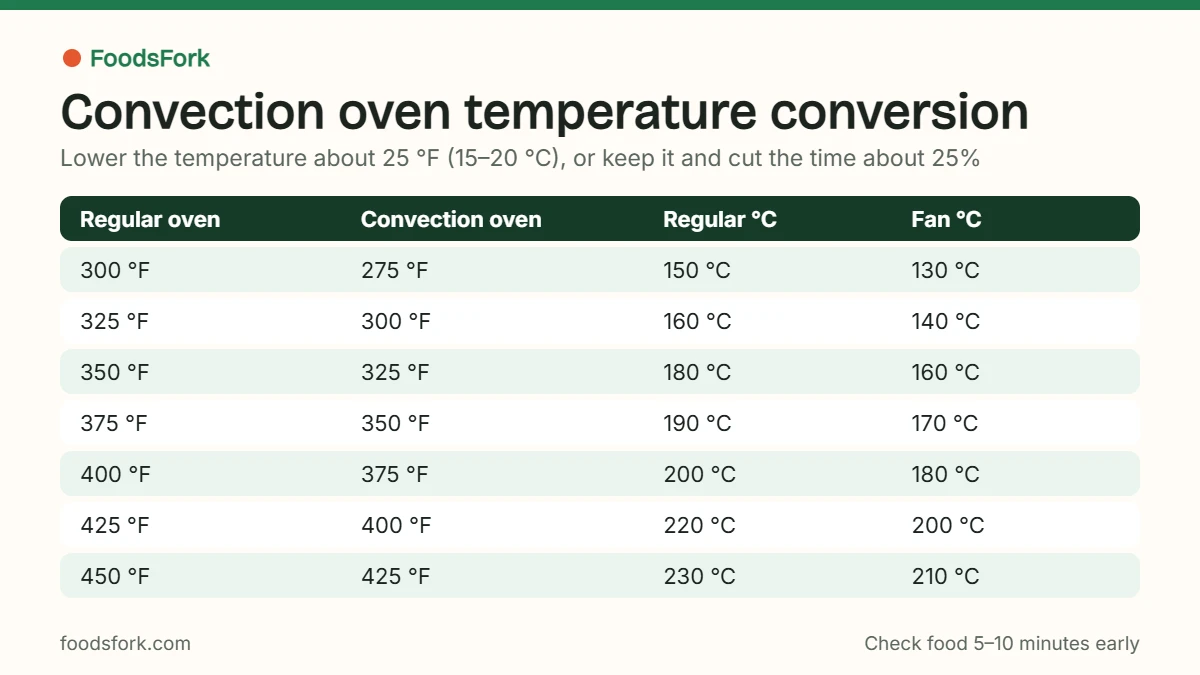
Convection oven temperature conversion chart
| Regular oven °F | Convection °F | Regular °C | Fan oven °C | Gas mark |
|---|---|---|---|---|
| 250 °F | 225 °F | 120 °C | 100 °C | ½ |
| 275 °F | 250 °F | 140 °C | 120 °C | 1 |
| 300 °F | 275 °F | 150 °C | 130 °C | 2 |
| 325 °F | 300 °F | 160 °C | 140 °C | 3 |
| 350 °F | 325 °F | 180 °C | 160 °C | 4 |
| 375 °F | 350 °F | 190 °C | 170 °C | 5 |
| 400 °F | 375 °F | 200 °C | 180 °C | 6 |
| 425 °F | 400 °F | 220 °C | 200 °C | 7 |
| 450 °F | 425 °F | 230 °C | 210 °C | 8 |
Gas marks apply to regular gas ovens. Need to convert between Fahrenheit and Celsius first? Use the Fahrenheit to Celsius converter, which also shows fan settings and gas marks.
Why Celsius recipes drop 20 degrees
25 °F is about 14 °C. British and European recipes usually round the fan adjustment to 20 °C, partly because their ovens step in 10 °C increments. Either is fine. If your food browns too quickly, go lower; if it is slow, go higher next time.
Fan oven vs conventional oven
“Fan oven” and “convection oven” mean the same thing. The difference is with a conventional oven, sometimes called a regular, thermal or static oven.
| Conventional oven | Fan (convection) oven | |
|---|---|---|
| How it heats | Elements at the top and bottom, still air | Elements plus a fan that moves hot air |
| Speed | Standard | About 20–25% faster |
| Browning | Stronger near the elements | More even all over |
| Hot spots | More common | Fewer |
| Multiple racks | Uneven; rotate often | Works well |
| Best for | Delicate cakes, custards, soufflés | Roasts, vegetables, cookies, pastry |
True convection vs regular convection
Some ovens have a third heating element around the fan, called true or European convection. It heats the moving air directly and gives the most even results. A plain fan without its own element still helps, but the effect is a little weaker. Both use the same conversion rule.
When to use convection
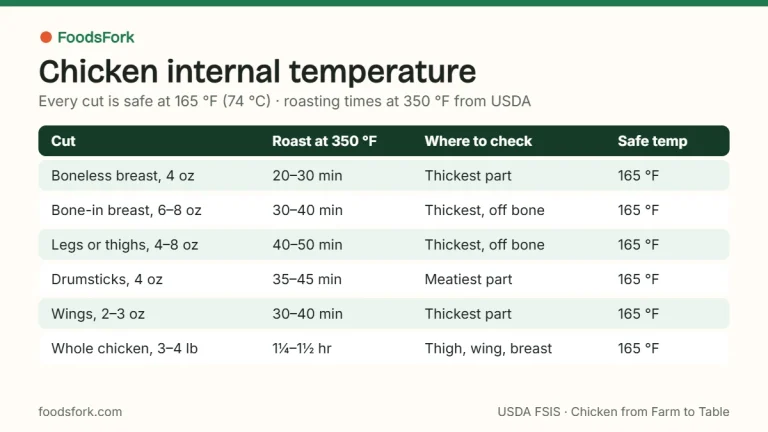
- Roasting meat and poultry. The moving air crisps skin and browns the outside. Roast chicken and turkey are great with the fan on. Check doneness with a thermometer; see our chicken internal temperature guide.
- Roasted vegetables. Better browning and crisp edges, in less time.
- Cookies on several trays. Bake two or three trays at once with more even results.
- Pastry and pie crusts. Fast, even heat helps the fat create flaky layers.
- Dehydrating and toasting. Moving air dries food faster.
When not to use convection
- Delicate cakes and quick breads. The surface can set before the inside rises, giving a domed or uneven top.
- Custards, cheesecakes and flan. These like gentle, even heat. The fan can dry the top or cause cracks.
- Soufflés. Moving air can push them off balance as they rise.
- Light foods that can blow around. Loose parchment, foil or very light pastry.
- Covered dishes. If the food is covered, the fan has little effect, so regular bake is fine.
If you do bake a cake with convection, lower the temperature by 25 °F and use the middle rack. Many cakes come out well this way.
Ovens that convert for you
Many newer ovens have a feature often called auto convection conversion. When you choose convection bake and enter 350 °F, the oven sets itself to about 325 °F. Some ovens show the converted number on the display; others show the original.
Read your manual or watch the display after you set it. If your oven converts automatically, enter the recipe’s normal temperature. If you lower it yourself as well, you will end up 50 °F too cool.
Convection bake vs convection roast
Many ovens offer both. Convection bake uses the fan with mostly bottom heat, for cookies, pies and casseroles. Convection roast adds more top heat for browning meats and vegetables. The temperature rule is the same for both.
Tips for better convection cooking
- Use low-sided pans. High sides block the moving air. Rimmed baking sheets and shallow roasting pans work best.
- Leave space. Keep about an inch around each pan, and do not cover racks with foil.
- Check early. Start checking 5 to 10 minutes before the recipe time, or at about three-quarters of the time for roasts.
- Preheat fully. Convection ovens often preheat faster, but let them reach temperature before baking.
- Weigh down light liners. Parchment and foil should be held flat by food.
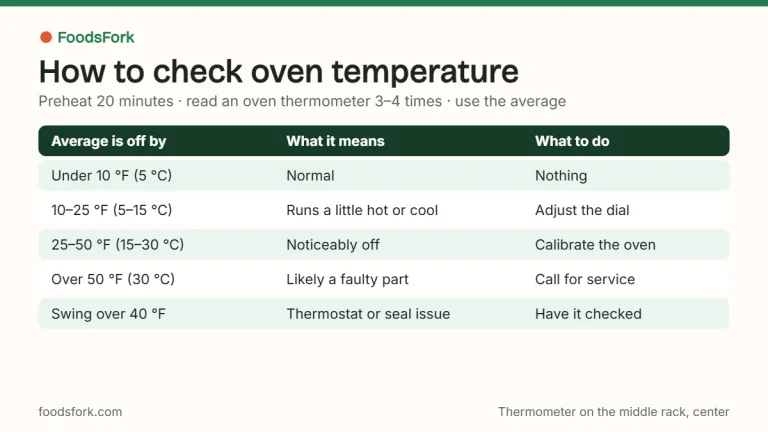
- Know your oven. If your oven runs hot or cold, convection does not fix that. See how to check oven temperature.
Convection settings by type of food
Roast chicken and turkey
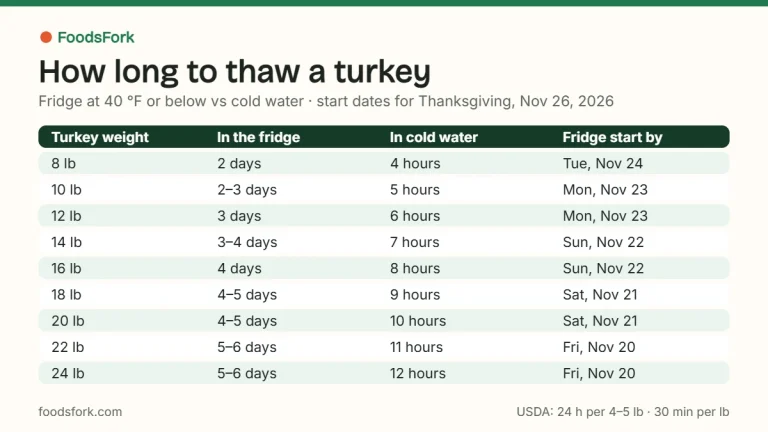
Many cooks keep the recipe temperature with convection roast and simply expect it to finish sooner, often about 25% faster. The skin browns well and the meat stays juicy. Start checking the thigh with a thermometer well before the recipe time. For a holiday bird, the turkey cooking time calculator gives regular oven times you can start from.
Roasted vegetables
Vegetables love convection. Use 25 °F lower than a regular recipe, or keep the temperature and check 10 minutes early. Spread them in a single layer with space between pieces, or they steam instead of browning.
Cookies
Lower the temperature by 25 °F and bake two or three trays at once. Cookies can bake in about the same time or a minute or two less. Watch the edges: they should be just golden.
Pies and pastry
The fan helps puff pastry and pie crusts rise and crisp. Lower the temperature by 25 °F. If the edges brown before the filling is done, cover them with a strip of foil, crimped on so it cannot blow off.
Bread and pizza
Crusty breads and pizza brown well with convection. Lower the temperature by 25 °F, or keep it and shorten the time. Soft sandwich loaves may do better on regular bake, so the crust does not set before the loaf finishes rising.
Casseroles
Covered casseroles gain little from the fan. Uncovered ones brown better on top. Use the usual 25 °F reduction and check that the center is hot all the way through.
Using a convection recipe in a regular oven
Many British, Australian and European recipes give a fan temperature, sometimes alongside the regular one. If you have a conventional oven, add about 20 °C, or about 25 °F. So 160 °C fan becomes 180 °C, and 325 °F convection becomes 350 °F.
Food may take a little longer and brown less evenly. Use the middle rack and turn the pan halfway through. Choose “Convection recipe → regular oven” in the converter above.
Air fryers and convection
An air fryer is a very small, very powerful convection oven. The fan sits close to the food, so it cooks even faster than a full-size convection oven. The usual rule is to lower the oven temperature by about 25 °F and cut the time by about 20%, then shake or flip halfway.
The oven to air fryer converter does this for any recipe. Using foil or parchment? Read can you put foil in an air fryer first.
Frequently asked questions
How do you convert a recipe for a convection oven?
Lower the temperature by about 25 °F (15 to 20 °C) and keep about the same cooking time, checking 5 to 10 minutes early. Or keep the temperature and cut the time by about 25%.
What is 350 °F in a convection oven?
Set a convection oven to about 325 °F for a recipe that says 350 °F in a regular oven. In Celsius, a recipe at 180 °C becomes about 160 °C fan.
Is a fan oven the same as a convection oven?
Yes. Fan oven is the common British term and convection oven is the common American term. Both use a fan to move hot air around the food.
Do I need to lower the temperature on my convection oven?
Usually, unless your oven does it for you. Many newer ovens have an automatic convection conversion that lowers the temperature when you choose convection bake. Check the manual.
What is the difference between a fan oven and a conventional oven?
A conventional oven heats with elements and relies on still air. A fan oven adds a fan that blows hot air around, so food cooks faster and browns more evenly.
Should I use convection for baking cakes?
You can, if you lower the temperature by about 25 °F. Some bakers prefer regular bake for delicate cakes, custards and soufflés, because moving air can make the top set before the inside rises.
When should you not use a convection oven?
Delicate batters, custards, cheesecakes, soufflés and quick breads often do better without the fan. Light parchment or loose foil can also blow around.
Does convection cook faster?
Yes. Moving air carries heat into food faster, so most food cooks about 20 to 25% faster at the same temperature.
Is an air fryer a convection oven?
An air fryer is a small, powerful convection oven. It cooks even faster, so the usual rule is to lower the temperature by 25 °F and cut the time by about 20%.
Can I bake on multiple racks in a convection oven?
Yes. That is one of its main benefits. The fan helps cook several trays more evenly, though it still helps to rotate them halfway.
Related tools and guides
How we checked this guide: the 25 °F reduction is the common guidance in oven manufacturer manuals; Celsius values are rounded to oven settings. Your oven manual comes first. Checked November 2026.